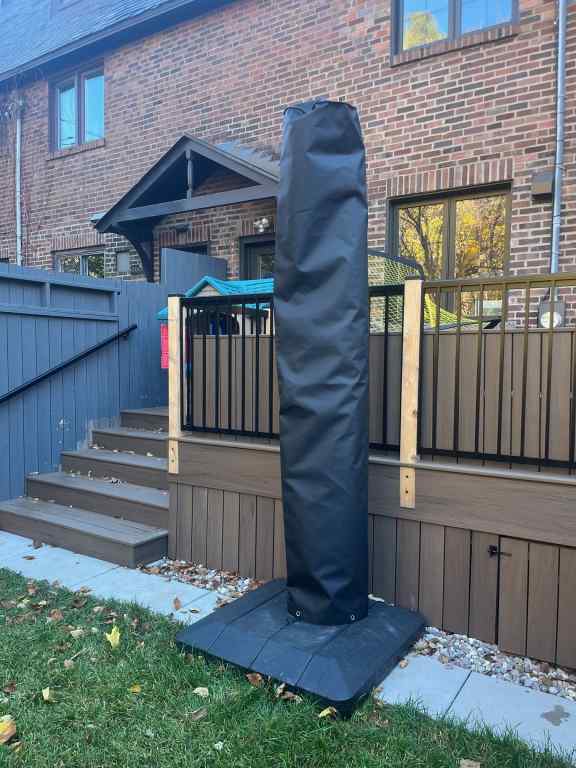
A patio umbrella is one of the more expensive pieces of furniture in a backyard, and winter is the season that shortens its life. Rain, snow, freeze and thaw, wind, fallen leaves, and mice looking for shelter all work on an umbrella left standing uncovered. A cover made to fit, pulled down to the base and fastened tight, keeps the umbrella dry through the winter and prolongs the life of the fabric and the frame.
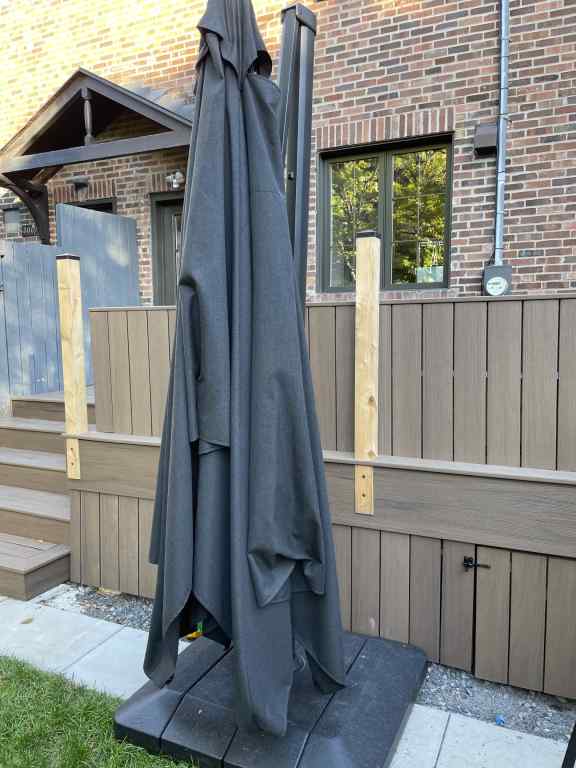
Left closed but uncovered, an umbrella spends the winter with its fabric folded in on itself. The folds hold damp leaves and moisture, and mildew grows where the fabric stays wet. Wind catches the loose folds and works the fabric against the ribs. Snow sits on top and melts into the folds. And a closed umbrella is dry, dark shelter, which is exactly what mice look for in late fall. By spring the fabric can be stained, faded, and chewed, and the frame can be bent from a winter of wind and snow load.
A cover changes all of that. It keeps rain and snow off the fabric, so the umbrella stays dry instead of sitting damp for months. It blocks sunlight, so the fabric fades far more slowly. It keeps leaves and debris out of the folds. It stops the wind from catching the fabric and working it loose. And a cover fastened tight at the base closes off the shelter mice want, so they move on instead of nesting inside.
None of that works if the cover is loose at the bottom. A cover that stops short, or hangs open at the hem, still lets in wind-driven rain, splash-back, and anything small enough to crawl under it. The base is where a cover earns its keep.
Clean it and let it dry. Brush off leaves and dirt, and wipe down the canopy. Let the umbrella dry fully before you cover it. Never cover a wet umbrella: a cover keeps water out, it does not dry water that is already trapped inside, and damp fabric under a cover grows mildew.
Close it and fold it neatly. Close the canopy and fold the fabric in evenly around the frame. Use the tie strap if your umbrella has one, so the folds stay together and the cover slips on without snagging.
Slip the cover on from the top. Pull it down over the closed canopy until it reaches the base. A cover that is long enough to reach the base is the right length; a cover that stops at the pole leaves the bottom of the umbrella exposed.
Tighten down the base. Cinch the hem and fasten it through the hem grommets with a cord or bungee, snug around the pole and the base, so there is no gap at the bottom. This is the step that keeps out wind-driven rain and moisture, and it is what keeps rodents from crawling in underneath. Check it after the first storm: covers settle as the fabric relaxes, and a hem that was snug in October can be loose by November.
Check it through the winter. After heavy snow, brush the snow off the top of the cover so the weight does not press down on the frame. Make sure the base is still snug, and that the cover has not worked loose in a windstorm.
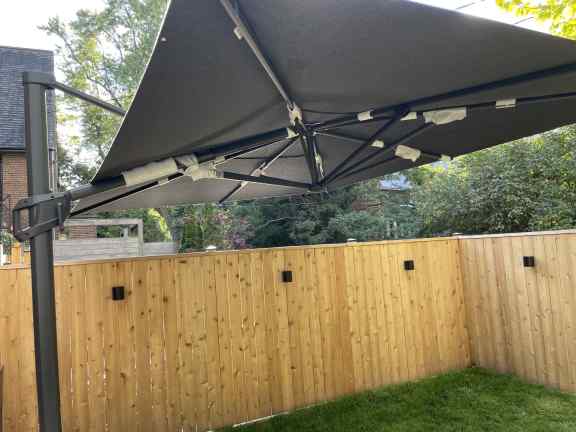
Umbrellas are not one size. A center-pole umbrella and a cantilever umbrella, like the one in the photos here, close down to different shapes and heights, and a cover made for one will not fit the other well. A cover that billows in the wind is a cover that lets weather in at the hem and wears itself out flapping. Measure the closed height and the width of the folded canopy, and get a cover made to those measurements. Be sure to measure the circumference at the widest point to ensure that the cover will fit the entire structure.
We make custom covers to measure, in heavy vinyl, for umbrellas and for just about any other outdoor equipment. Send us your measurements, and photos of the umbrella if the shape is unusual, and we will quote a cover that fits it. See our custom equipment covers or contact us for a quote.
Take the cover off on a dry day, let the umbrella air out, and look it over before the season starts. Check the folds for mildew or chew marks, and check the ribs and joints for damage from snow load. Then store the cover somewhere dry, ready for next fall. A covered umbrella comes out of winter looking much like it went in, and that is the whole point.
